


The safe mobile payment becomes reality at the Mobile World Congress
The safe mobile payment has become a reality that can be exploited commercially when banks and operators so desire, as revealed at Mobile World Congress, held in Barcelona.
GAD, a multinational company specializing in the safety and well known in the world of money by making legal tender notes, presented their solutions to pay by phone safely via NFC contactless technology, which apparently has emerged as the standard to be used anywhere in the world. But it also provides security when conducting financial transactions with sophisticated systems that protect data and communications between machines.
The company, which is used by some governments to encrypt mobile phone conversations of senior executives, also shows this technology in the MWC. These security solutions to address all the changes that are occurring in the mobile world with the advent of broadband, which allows more sophisticated services that require data protection.
Dual core
Other highlights include dual-core processors, which comes to smart phones, computers becoming sophisticated, closer to the world of computing. The first consequence is that the market for high-end phones will be downgrading to reach the general public, say executives from Qualcomm, the largest multinational chips in the mobile world.
These mobile processors make faster, more efficient and longer battery life. Qualcomm executives say their dual-core processor is a fundamental difference: each of its CPU works separately, so that only combined if necessary. So there is more efficiency and battery saving, they say.
This manufacturer, which calls its processors with the name of Snapdragon, has taken another step in this conference to introduce the quad-core processor that will allow using devices and heated less and have more features and lesser extent.
Source: Reuters

Le paiement avec le mobile devient une réalité au Mobile World Congres
Le paiement mobile a été rendu sûr comme une réalité qui peut être exploitée commercialement lorsque les banques et les opérateurs pour le désir, comme l´a révélé au Mobile World Congress, qui s´est tenue à Barcelone.
GAD, une multinationale spécialisée dans la sécurité et le bien connu dans le monde de l´argent en prenant des notes légal, ont présenté leurs solutions de paiement par téléphone en toute sécurité via la technologie sans contact NFC, qui, apparemment, s´est imposé comme la norme à utiliser partout dans le monde. Mais il fournit également une sécurité lorsqu´ils effectuent des transactions financières avec des systèmes sophistiqués qui protègent les données et les communications entre machines.
La société, qui est utilisé par certains gouvernements pour crypter les conversations téléphoniques mobiles de cadres supérieurs, montre également cette technologie dans la CMM. Ces solutions de sécurité pour régler tous les changements qui se produisent dans le monde mobile avec l´avènement du haut débit, qui permet des services plus sophistiqués qui exigent la protection des données.
Dual core
Autres faits saillants-core processeurs double, ce qui revient à les téléphones intelligents, les ordinateurs deviennent sophistiqués, plus proche du monde de l´informatique. La première conséquence est que le marché des téléphones haut de gamme sera déclassement pour atteindre le grand public, par exemple des dirigeants de Qualcomm, le plus grand puces multinationales dans le monde mobile.
Ces processeurs mobiles rendre plus rapide, plus efficace et la vie de batterie plus longue. Qualcomm dirigeants affirment que leur-processeur dual core est une différence fondamentale: chacun de ses CPU fonctionne séparément, de sorte que seuls combinés si nécessaire. Il n´y a donc plus d´efficacité et d´économie de batterie, disent-ils.
Ce constructeur, qui appelle ses processeurs avec le nom de Snapdragon, a franchi une autre étape dans cette conférence de présenter le processeur quad-core qui permettent d´utiliser les appareils et chauffée moins et ont plus de fonctionnalités et de moindre mesure.
Source: Reuters
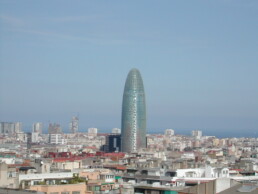
Barcelona implements the electronic processing of records
Barcelona City Council has established a platform for information management as part of a project that aims to meet the objectives of the current mandate of the council relating to eGovernment, where the implementation of the electronic record is key. In the same vein, and to achieve the aforementioned objective, the Barcelona City Council has adopted a platform which makes available management tools and organizational processes and storage of records but supports the Document Management and Digital Asset Management file.
The investment project has represented a party of 600,000 euros, for a few concepts that include the acquisition of hardware infrastructure and Documentum suite licenses.
The different phases of implementation have been developed taking into account a number of factors. As explained by Lluís Olivella, "first, have been identified by staff of the Barcelona City Council file a classification scheme and associated metadata, to allow, from the beginning of a file, can proceed final classification and to provide it information that will subsequently facilitate the life cycle of records. " But on the other hand, the IMI has made the development of a software (Framework document) that facilitates the interaction of different records management applications with the Records Management Subsystem (Documentum). This allows developers do not need to know the API (Application Programme Interface) and wean Documentum specific application development for a particular product.
Finally, we have developed various records management applications (EOBR, eOcupación of Public Roads, Inspections, eContrato, eSubvenciones, ...) using the framework document.
The benefits are seeing are related, in the words of Lluís Olivella, with the fact that technological infrastructure is being pivotal in the implementation of the different local electronic records, and is impacting positively not only in reducing the role, but also a reduction in processing times, "is estimated to save more than 20 tons per year in paper generation and that will reduce internal processing time by 30% on average," the official said.
Keep in mind that until the last two years, records management, including processing flows (workflows), was done by developments in client / server technology tailored by the Institut Municipal d´Informàtica de l´Ajuntament de Barcelona .
Technology Plan
The document management project based on EMC Documentum is part of the Technological Plan Ajuntament de Barcelona. He describes the manager, who said "has done a great deal of internal transformation in recent years. This effort plasma exchange in Barcelona 2.0 Plan, which defines a new model of management and which includes different areas of municipal management and process redesign, and where, indeed, seen as one of the driving forces of e-Government Plan and the Plan Information Systems and Telecommunications, which is key electronic record and all common services management electronics, such as electronic document. "
Among the innovative projects under way also contains a comprehensive e-Government strategy that includes, besides the electronic file, the common development of eGovernment services for different records, electronic signatures or Portafirmas, as a clear example. Furthermore, and from the standpoint of interaction with citizens and businesses, we have tried to enhance the multi-channel in attention, launching ever more fully electronic services, the processing of building permits is an example of this, and offering simple steps via mobile.
It also provides the manager of IMI other data, is that, in addition to the electronic record and all procedures are available through the portal of more than 800 Procedures-processing options, "has fostered the exchange of data and other certificates government, estimated at more than 295,000 a year. "The interoperability platform means not only saving time for governments but also for individuals and businesses avoiding travel documentaries and multiple inputs," says Olivella, who emphasizes the beginning "of a strategy of proactive services, integrating or making arrangements simple, the service of ´Welcome to Barcelona´ integrated into one intended citizen, the change of address, more than 10 procedures commonly associated with this management. "
As the number of internal users who must serve as the solution goes to the heart of municipal activity, impact on virtually all council staff, central departments, districts and autonomous bodies, about 8,000 people.
The Manager of the Institut Municipal d´Informàtica de Barcelona City Council wants to highlight how the City is continually innovating in terms of new needs identified in the different municipal areas and the evolution of technology. In the area of application development, is committed to Java technology. Net and SAP (and most important), and takes into account open source software solutions.
The ICT budget of the consistory, counting the ICT staff, current expenditure and investment, is about 60 million euros per year on average in the mandate from 2008 to 2011. This item enables to carry out initiatives considered as pioneers. Thus, as pointed Lluís Olivella, "The City Council has pioneered the launch earlier this year its second data processing center, which we consider key to support the growing needs of processing capacity, as establish systems for redundancy and continuity of services, essential in e-Government projects, which require levels of availability much more stringent than at the time of paper. "
WiFi Project
The public agency has launched one of its flagship projects which basically consists of the introduction of two paths for the deployment of WiFi networks, one for citizens, Barcelona WiFi, and other municipal staff, WiFi Public Roads. "With WiFi SmartCity streets or have deployed a network access municipal WiFi Mesh, which complements the existing fiber optic backbone and local organization provides the base for the development of municipal broadband in the street, key intelligent management of municipal services, which has been called the Smart-City "says Olivella. In turn, highlights some other benefits of the services that operate broadband network, "that increase the quality, performance, flexibility and reliability, and, therefore, favor an objective improvement of the services the Barcelona City Council offers the public. "
Source: computing.es
Barcelone réalise le traitement électronique des documents
La Mairie de Barcelone a mis en place une plate-forme de gestion des informations dans le cadre d´un projet qui vise à atteindre les objectifs du mandat actuel du Conseil relative à l´administration en ligne, où la mise en œuvre du dossier électronique est la clé. Dans la même veine, et pour atteindre l´objectif précité, le Conseil municipal de Barcelone a adopté une plate-forme qui rend disponibles des outils de gestion et des processus organisationnels et de stockage des documents, mais prend en charge la gestion des documents et Digital Asset Management fichier.
Le projet d´investissement a représenté une partie de 600.000 euros, pour un certain nombre de concepts qui incluent l´acquisition de l´infrastructure matérielle et les licences suite Documentum.
Les différentes phases de mise en œuvre ont été élaborées en prenant en compte un certain nombre de facteurs. Comme l´a expliqué Lluís Olivella, «d´abord, ont été identifiés par le personnel de la Mairie de Barcelone déposer un plan de classification et des métadonnées associées, afin de permettre, dès le début d´un fichier, peut procéder classement final et de fournir des informations qui lui faciliter ensuite le cycle de vie des documents. " Mais d´autre part, l´IMI a permis le développement d´un logiciel (document cadre) qui facilite l´interaction entre les différentes applications de gestion de documents avec le sous-système de gestion des documents (Documentum). Cela permet aux développeurs n´ont pas besoin de connaître les API (Application Programme Interface) et sevrer Documentum développement d´applications spécifiques pour un produit particulier.
Enfin, nous avons développé différentes applications de gestion des documents (EOBR, eOcupación des routes publiques, les inspections, eContrato, eSubvenciones, ...) en utilisant le document-cadre.
Les prestations sont de voir sont liées, dans les paroles de Lluís Olivella, avec le fait que l´infrastructure technologique est essentiel dans la mise en œuvre des différents locaux des documents électroniques, et un impact positif non seulement pour réduire le rôle, mais aussi une réduction des délais de traitement », est estimé à économiser plus de 20 tonnes par an dans la production de papier et qui permettra de réduire le temps de traitement interne de 30% en moyenne," a dit l´officiel.
Gardez à l´esprit que tant que les deux dernières années, la gestion des documents, y compris les flux de traitement (workflow), a été fait par l´évolution de la technologie client / serveur sur mesure par l´Institut Municipal d´Informàtica de l´Ajuntament de Barcelona .
Plan technologique
Le projet de gestion documentaire basée sur EMC Documentum fait partie du plan technologique Ajuntament de Barcelone. Il décrit le gérant, qui a dit "a fait beaucoup de transformation interne ces dernières années. Cet échange de plasma effort à Barcelone 2.0 Plan, qui définit un nouveau modèle de gestion et qui comprend les différents domaines de la gestion municipale et la refonte des processus, et où, en effet, considérée comme l´une des forces motrices de l´e-gouvernement et le plan des systèmes d´information Plan et des télécommunications, qui est la clé électronique des dossiers et tous les services communs de gestion électronique, tels que des documents électroniques. "
Parmi les projets innovants en cours contient également une stratégie globale e-gouvernement qui comprend, outre le dossier électronique, le développement commun de services administratifs en ligne pour les différents dossiers, les signatures électroniques ou Portafirmas, comme un exemple clair. En outre, et du point de vue de l´interaction avec les citoyens et les entreprises, nous avons essayé de renforcer la multi-canal de l´attention, le lancement de plus en plus de services entièrement électronique, le traitement des permis de bâtir est un exemple de cela, et offrant étapes simples via mobile.
Il fournit également le gestionnaire de données IMI autres, est que, en plus de l´enregistrement électronique et toutes les procédures sont accessibles via le portail de plus de 800 options de procédures de traitement, "a favorisé l´échange de données et d´autres certificats gouvernement, estimé à plus de 295.000 par an. "La plate-forme d´interopérabilité des moyens non seulement de gagner du temps pour les gouvernements mais aussi pour les particuliers et les entreprises en évitant documentaires Voyage et entrées multiples, dit Olivella, qui met l´accent sur le début" d´une stratégie de services proactifs, l´intégration ou à prendre simple, le service de «Bienvenue à Barcelone" intégrés dans un seul citoyen destiné, le changement d´adresse, plus de 10 procédures couramment associés à cette gestion. "
Comme le nombre d´utilisateurs internes qui doivent servir de la solution est au cœur de l´activité municipale, l´impact sur pratiquement l´ensemble du personnel du conseil, des services centraux, des districts et des organismes autonomes, environ 8.000 personnes. Le chef de l´Institut Municipal d´Informatique de la Mairie de Barcelone veut mettre en évidence la façon dont la ville est sans cesse d´innover en termes de nouveaux besoins identifiés dans les différents domaines municipal et de l´évolution de la technologie. Dans le domaine du développement d´applications, est déterminé à la technologie Java. Net et SAP (et le plus important), et tient compte de solutions logicielles open source.
Le budget TIC du consistoire, en comptant le personnel des TIC, les dépenses courantes et d´investissement, est d´environ 60 millions d´euros par an en moyenne dans le mandat de 2008 à 2011. Cet élément permet de mener des initiatives considérées comme des pionniers. Ainsi, comme l´a souligné Lluís Olivella, «Le Conseil municipal a été le premier lancement plus tôt cette année son deuxième centre de traitement de données, que nous considérons comme essentiels pour soutenir les besoins croissants de capacité de traitement, établir des systèmes de redondance et de continuité des services, essentiels dans les projets e-gouvernement, qui requièrent des niveaux de disponibilité beaucoup plus sévères qu´à l´époque de papier. "
WiFi projet
L´organisme public a lancé un de ses projets phares qui se compose essentiellement de l´introduction de deux chemins d´accès pour le déploiement de réseaux WiFi, un pour les citoyens, Barcelone WiFi, et d´autres employés municipaux, WiFi voies publiques. "Avec des rues SmartCity WiFi ou ont déployé un accès au réseau municipal WiFi Mesh, qui complète la fibre optique existants épine dorsale et de l´organisation locale constitue la base pour le développement du haut débit municipale dans la rue, la clé gestion intelligente des services municipaux, qui a été appelé le Smart-Ville », explique Olivella. À son tour, met en lumière certaines autres prestations de services qui opèrent réseau à large bande », qui augmentent la qualité, la performance, flexibilité et fiabilité, et, par conséquent, en faveur d´une amélioration objective des services de la La Mairie de Barcelone offre au public. "
Source: computing.es
Barcelona hace realidad la tramitación electrónica de expedientes
El Ajuntament de Barcelona ha implantado una plataforma de gestión de la información como parte de un proyecto que tiene como finalidad cumplir con los objetivos del mandato actual del consistorio referentes a la eAdministración, donde la implantación del expediente electrónico es pieza clave. En esta misma línea, y para lograr el objetivo citado, el Ajuntament de Barcelona se ha dotado de una plataforma que permite disponer de herramientas de gestión de procesos y de organización y almacenamiento de expedientes pero que soporta la Gestión Documental, Gestión de Activos Digitales y Archivo.
La inversión del proyecto ha representado una partida de 600.000 euros, por unos conceptos que incluyen la adquisición de la infraestructura hardware y las licencias de la suite Documentum.
Las diferentes fases de implantación se han desarrollado teniendo en cuenta una serie de factores. Tal y como explica Lluís Olivella, "en primer lugar, se han definido por parte del personal de archivo del Ajuntament de Barcelona un cuadro de clasificación y los metadatos asociados, para permitir que, ya desde el inicio de un expediente, se proceda a su clasificación definitiva y a dotarlo de la información que permitirá a posteriori facilitar el ciclo de vida de los expedientes". Pero por otra parte, el IMI ha realizado el desarrollo de un software (Framework documental) que facilita la interacción de las diferentes aplicaciones de gestión de expedientes con el subsistema de Gestión de Expedientes (Documentum). Esto permite que los desarrolladores no tengan que conocer las API (Aplication Programme Interface) específicas de Documentum e independizar los desarrollos de aplicaciones de un producto concreto.
Por último, se han desarrollado las diferentes aplicaciones de gestión de expedientes (eObras, eOcupación de la Vía Pública, Inspecciones, eContrato, eSubvenciones, ...) utilizando el framework documental.
Los beneficios que se están apreciando tienen que ver, en palabras de Lluís Olivella, con el hecho de que esta infraestructura tecnológica está siendo clave en la implantación de los diferentes expedientes electrónicos municipales, y está impactando positivamente no solamente en la reducción del papel sino también en una reducción de los plazos de tramitación: "se estima que ahorraremos más de 20 toneladas anuales en generación de papel y que se reducirán los plazos internos de tramitación en un 30% de media", indica el responsable.
Hay que tener en cuenta que hasta estos últimos dos años, la gestión de expedientes, incluyendo flujos de tramitación (workflows), se realizaba mediante desarrollos con tecnología cliente/ servidor hechos a medida por el Institut Municipal d´Informàtica de l´Ajuntament de Barcelona.
Plan Tecnológico
El proyecto de gestión documental basado en Documentum de EMC se enmarca dentro del Plan Tecnológico del Ajuntament de Barcelona. Así lo describe el directivo, para quien "ha realizado un gran esfuerzo de transformación interna en los últimos años. Este esfuerzo de cambio se plasma en el Plan Barcelona 2.0, que define un nuevo modelo de gestión y en donde se incluyen diferentes ámbitos de la gestión municipal a rediseñar y transformar, y donde, precisamente, contempla como uno de los ejes motores el Plan de eAdministración y el Plan de Sistemas de Información y Telecomunicaciones, en los cuales, es pieza clave el expediente electrónico y todos los servicios comunes de administración electrónica, como el documento electrónico".
Entre los proyectos innovadores que están en marcha figura asimismo una estrategia integral de Administración Electrónica que incluye, además del expediente electrónico, el desarrollo de servicios comunes de administración electrónica para los diferentes expedientes; la firma electrónica o el portafirmas, como un claro ejemplo. Además, y desde el punto de vista de interacción con ciudadanía y empresas, se ha querido potenciar la multicanalidad en la atención, poniendo en marcha cada vez más servicios íntegramente electrónicos; la tramitación de los permisos de obras es un ejemplo de ello, y, ofreciendo trámites sencillos a través del móvil.
También aporta el Gerente del IMI otro dato, y es que, además del expediente electrónico y todos los trámites que se ofrecen a través del Portal de Trámites -más de 800 opciones de tramitación-, se ha potenciado el intercambio de datos y certificados con otras administraciones, cifrado en más de 295.000 al año. "La plataforma de interoperabilidad significa no solamente un ahorro en tiempo para las administraciones sino también para las personas y empresas que evitan desplazamientos y múltiples aportaciones documentales", destaca Olivella, quien subraya el inicio "de una estrategia de servicios proactivos, integrando trámites o haciéndolos más sencillos; el servicio de ´Bienvenida a Barcelona´ integra en una sola intención ciudadana, el cambio de domicilio, más de 10 trámites habitualmente asociados a esta gestión".
En cuanto al número de usuarios internos a los que tiene que dar servicio, como la solución afecta al núcleo de la actividad municipal, impacta prácticamente sobre todo el personal del Ayuntamiento, de departamentos centrales, distritos y organismos autónomos, unas 8.000 personas.
El Gerente del Institut Municipal d´Informàtica de Ajuntament de Barcelona quiere resaltar cómo el Ayuntamiento está innovando continuamente en función de las nuevas necesidades que se identifican en las diferentes áreas municipales y de la evolución de la tecnología. En el ámbito del desarrollo de aplicaciones, se apuesta por tecnologías Java, .Net y SAP (como más importantes), y se tienen en cuenta soluciones basadas en software abierto.
El presupuesto TIC del consistorio, contando el personal TIC, gasto corriente e inversiones, es de unos 60 millones de euros al año de promedio en el mandato 2008- 2011. Esta partida posibilita llevar a cabo iniciativas consideradas como pioneras. Es así, como recuerda Lluís Olivella, que "el Ajuntament ha sido pionero en poner en marcha hace unos meses su segundo centro de proceso de datos, que consideramos pieza clave para dar soporte a las necesidades tanto de crecimiento de capacidad de proceso, como de establecer sistemas de redundancia y de continuidad de los servicios; imprescindibles en los proyectos de Administración Electrónica, que requieren niveles de disponibilidad muchísimo más estrictos que en la época del papel".
Proyecto WiFi
El organismo público ha puesto en marcha uno de sus proyectos estrella que consiste básicamente en la implantación de otros dos para el despliegue de sendas redes WiFi, una destinada a ciudadanos, Barcelona WiFi, y otra para el personal municipal, WiFi Vía Pública. "Con WiFi Vía Pública o SmartCity hemos desplegado una red WiFi Mesh de acceso municipal, que complementa la actual infraestructura troncal de fibra óptica y dota a la organización municipal de la base para el desarrollo de servicios municipales de banda ancha en la calle, clave para la gestión inteligente de los servicios municipales, lo que se ha denominado la Smart- City", afirma Olivella. A su vez, subraya algunos otros beneficios de los servicios que operan con red de banda ancha, "que permiten aumentar la calidad, las prestaciones, la flexibilidad y la fiabilidad, y, por tanto, favorecer a una mejora objetiva de los servicios que el Ajuntament de Barcelona ofrece al público".
Fuente: computing.es

Les utilisateurs de l´Internet entre 45 et 64 ans réduisent la fracture numérique
La population de ce groupe augmente sa présence dans le réseau de plus que la moyenne
Les anciens ne tirent pas pleinement parti des potentiels d´Internet
La fracture numérique entre les générations qui est la différence selon l´âge de l´utilisation des nouvelles technologies est de plus en plus proche. Dans son dernier rapport, Telefónica a conclu que la population entre 45 et 64 est le secteur qui a contribué à l´avancement de la société de l´information en 2010, avec taux d´inclusion dessus de la moyenne. Cela contribue à réduire des souffrances et de solitude qui les maintient en activité intellectuelle
La préoccupation actuelle, selon un expert en société de l´information José Manuel Robles, a moins à voir avec de rejoindre le réseau, mais avec la «différence des usages" qui rendent les jeunes et les adultes dans les possibilités de l´Internet. Au-delà montrer une certaine réticence encore plus de rejoindre des réseaux sociaux ne sont généralement pas profiter pleinement offerts par le réseau d´interagir avec les éléments de gestion et d´achat sans défilement. La plupart se contentent de rechercher des informations et communiquer, mais pas au-delà », explique t-il.
Source: elperiodico.com
Los internautas de entre 45 y 64 años estrechan la brecha digital
La población de esta franja aumenta su presencia en la red más que la media
Los ancianos no sacan todo el partido a las posibilidades que ofrece internet
La brecha digital entre generaciones entendida como la diferencia por edad de la utilización de las nuevas tecnologías se va estrechando. En su último informe, Telefónica concluye que la población de entre 45 y 64 años es el sector que más contribuyó al avance de la sociedad de la información en el 2010, con tasas de incorporación superiores a la media. Ello contribuye a paliar la soledad que algunos padecen y les mantiene intelectualmente activos
La preocupación actual, señala el experto en sociedad de la información José Manuel Robles, no tiene tanto que ver con la incorporación a la red sino con la "diferencia de usos" que hacen los jóvenes y los adultos de las posibilidades de internet. Más allá de que los mayores aún muestran reticencias a sumarse a las redes sociales, normalmente tampoco sacan el máximo partido que ofrece la red para relacionarse con la administración y comprar artículos sin tener que desplazarse. La mayoría se conforma con buscar información y comunicarse, "pero no van más allá", explica.
Fuente: elperiodico.com
Internet users between 45 and 64 narrow the digital divide
The population of this age increases its presence in the network more than the average
The elders do not take full advantage of internet potential
The digital divide between generations which is the difference by age of the use of new technologies is becoming closer. In its latest report, Telefónica concluded that the population between 45 and 64 is the sector that contributed to the advancement of information society in 2010, with inclusion rates above average. This helps to alleviate some suffering and loneliness that keeps them intellectually active
The current concern, says expert in information society José Manuel Robles, has less to do with joining the network but with the "difference of uses" that make young people and adults in the possibilities of the Internet. Beyond that show even greater reluctance to join social networks usually do not take full advantage offered by the network to interact with management and purchase items without scrolling. Most are content to seek information and communicate, "but not beyond, " he explains.
Source: elperiodico.com
ICT for next generation Cities
The challenge of fast urbanization is opening the way for the development of highly "smarter" cities, as more and more of its services rely on emerging technologies. The differentiating factor that can make cities "smart" is the integrated usage of information and communication technologies (ICT) in optimizing the flow of information between seven critical city infrastructure services: administration, education, healthcare, public safety, real estate, transportation, and utilities. By implementing initiatives based on this information to enhance efficiency and performance of these services to the citizen you create cities that are "smarter."
From the administration point of view a smart city will have a reliable system to reach the citizens effectively, to receive feedback, to collect data, to generate statistics and to properly communicate political decisions in a transparent manner. This will support decisions makers with the necessary knowledge required to make acute and quick decisions on city planning and maintenance.
Use of ICT in education services will improve the quality and experience while reducing costs. In developing countries, providing internet access to the educational resources will increase attendance, especially when targeting rural populations surrounding the city or individuals who cannot participate to daily courses. Usage of digital content and collaboration technologies will reduce costs while providing a higher quality and improved experience.
Smart healthcare systems can provide faster and more reliable services. Using scalable storage systems and wide communication platform, patient records con be stored and shared with any medical unit which requires them. Also the communication platform can be used to improve response time in case of emergency services. This is key during a time where epidemics are spreading across cities and information of patient diagnosis is pivotal to diagnosing and treating new patients.
Public safety can make use of communication technologies to reduce deployment time of the emergency response units. In the same time the communication network could be use to relay real-time information between dispatchers and filed units. While dispatchers have access to information via desktop computers, field units can access the network via handheld devices. Public safety services can also make use of closed-circuit television (CCTV) combined with video analytics and global positioning services in order to optimize deployment time. All of these allow for effective, immediate transition of data so that disturbances can be identified and controlled in an aggressive manner.
In real estate ICT can help reduce operating costs by using management systems to automate heating, cooling and illumination. Through motion, temperature, and weight censoring, lighting and cooling units can be controlled to operate at the most efficient levels. From inception, computer modeling will help in building design and identifying appropriate materials, architectural design as well adherence and reporting to relative green building certifications such as LEED.
Transportation can benefit from reduced traffic congestion and more efficient public transport by implementing smart computing technologies like congestion pricing. By passing through electronically controlled tolls, drivers pay more to use more congested roads in rush hours. Not only it reduces traffic congestion, but reduces the environmental impact of the transportation service while raising funds for the public transport.
Utilities can make use of smart grids to optimize water, gas and electricity consumption. Smart grids help identify water leaks and electricity losses. Also, transparency in the measurements towards the consumers can help in responsible usage behaviors and improve demand side management. Replacement of the carbon-intensive fuels with renewable energy can also contribute to "smarter" utilities by ensuring they are tapping into endless resources.
For the success of a smart city project ICT must be at the core of city planning and design. You cannot manage what you cannot measure, and you cannot accurately measure in real time without effective ICT tapping into all aspects of your city and aggregating the data.
Source: www.theurbanvision.com/
ICT for next generation Cities
The challenge of fast urbanization is opening the way for the development of highly "smarter" cities, as more and more of its services rely on emerging technologies. The differentiating factor that can make cities "smart" is the integrated usage of information and communication technologies (ICT) in optimizing the flow of information between seven critical city infrastructure services: administration, education, healthcare, public safety, real estate, transportation, and utilities. By implementing initiatives based on this information to enhance efficiency and performance of these services to the citizen you create cities that are "smarter."
From the administration point of view a smart city will have a reliable system to reach the citizens effectively, to receive feedback, to collect data, to generate statistics and to properly communicate political decisions in a transparent manner. This will support decisions makers with the necessary knowledge required to make acute and quick decisions on city planning and maintenance.
Use of ICT in education services will improve the quality and experience while reducing costs. In developing countries, providing internet access to the educational resources will increase attendance, especially when targeting rural populations surrounding the city or individuals who cannot participate to daily courses. Usage of digital content and collaboration technologies will reduce costs while providing a higher quality and improved experience.
Smart healthcare systems can provide faster and more reliable services. Using scalable storage systems and wide communication platform, patient records con be stored and shared with any medical unit which requires them. Also the communication platform can be used to improve response time in case of emergency services. This is key during a time where epidemics are spreading across cities and information of patient diagnosis is pivotal to diagnosing and treating new patients.
Public safety can make use of communication technologies to reduce deployment time of the emergency response units. In the same time the communication network could be use to relay real-time information between dispatchers and filed units. While dispatchers have access to information via desktop computers, field units can access the network via handheld devices. Public safety services can also make use of closed-circuit television (CCTV) combined with video analytics and global positioning services in order to optimize deployment time. All of these allow for effective, immediate transition of data so that disturbances can be identified and controlled in an aggressive manner.
In real estate ICT can help reduce operating costs by using management systems to automate heating, cooling and illumination. Through motion, temperature, and weight censoring, lighting and cooling units can be controlled to operate at the most efficient levels. From inception, computer modeling will help in building design and identifying appropriate materials, architectural design as well adherence and reporting to relative green building certifications such as LEED.
Transportation can benefit from reduced traffic congestion and more efficient public transport by implementing smart computing technologies like congestion pricing. By passing through electronically controlled tolls, drivers pay more to use more congested roads in rush hours. Not only it reduces traffic congestion, but reduces the environmental impact of the transportation service while raising funds for the public transport.
Utilities can make use of smart grids to optimize water, gas and electricity consumption. Smart grids help identify water leaks and electricity losses. Also, transparency in the measurements towards the consumers can help in responsible usage behaviors and improve demand side management. Replacement of the carbon-intensive fuels with renewable energy can also contribute to "smarter" utilities by ensuring they are tapping into endless resources.
For the success of a smart city project ICT must be at the core of city planning and design. You cannot manage what you cannot measure, and you cannot accurately measure in real time without effective ICT tapping into all aspects of your city and aggregating the data.
Source: www.theurbanvision.com/