

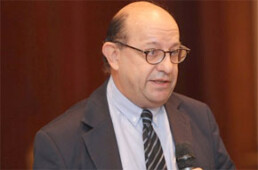
Nomination de Josep Roig comme Secrétaire Général de CGLU
Le Bureau Exécutif de CGLU, qui s´est réuni à Rabat, a nommé Josep Roig au poste de Secrétaire Général de CGLU, finalisant ainsi le processus de sélection international qui avait été lancé.
Josep Roig, Secrétaire Général de Metropolis depuis 2000, est impliqué dans la Section métropolitaine de CGLU en tant que membre actif et fondateur depuis 1985. Economiste de formation, il a travaillé pour la région métropolitaine de Barcelone à différents postes et a également été Directeur exécutif de l´Université de Barcelone de 1990 à 1994.
Pendant le discours qu´il a prononcé devant 216 dirigeants de collectivités locales de 40 pays à l´occasion de sa nomination, M. Roig a exprimé sa gratitude de se voir confier cette tâche ambitieuse et a souligné le besoin de renforcer le rôle de CGLU en tant que réseau des réseaux travaillant sur le plaidoyer et l´innovation.
Josep Roig prendra ses nouvelles responsabilités au mois de septembre. D´ici là, M. Clarence Anthony poursuivra son travail en tant que Directeur par intérim de CGLU.
Source: www.cities-localgovernments.org

Appointment of Josep Roig as UCLG Secretary General
The UCLG Executive Bureau meeting in Rabat appointed Josep Roig, as UCLG Secretary General following an international recruitment process.
Josep Roig, Secretary General of Metropolis since 2000, has been involved in the Metropolitan Section of UCLG as a founding and active member since 1985. Economist by education, he has worked at the Metropolitan Area of Barcelona in different positions and was Executive Director of the University of Barcelona during the period 1990-1994.
At his appointment speech before 216 local government leaders from 40 countries, Mr. Roig expressed his gratitude for the challenging task entrusted to him and the need to strengthen UCLG´s role as network of networks working towards advocacy action and innovation.
Josep Roig will be assuming his new responsibilities upcoming September. Until then, Mr. Clarence Anthony will continue his work as Interim Manager of UCLG.
Source: www.cities-localgovernments.org
Nombramiento de Josep Roig como Secretario General de CGLU
La reunión del Bureau Ejecutivo de CGLU en Rabat nombró a Josep Roig, como Secretario General de CGLU luego de un proceso de internacional de selección.
Josep Roig, Secretario General de Metrópolis desde 2000, ha participado en la sección metropolitana de CGLU como miembro fundador y activo desde 1985. Economista de profesión, ha trabajado en el Área Metropolitana de Barcelona en diferentes posiciones y fue Director Ejecutivo de la Universidad de Barcelona durante el período 1990-1994.
En su discurso ante 216 líderes de gobiernos locales de 40 países, el Sr. Roig expresó su agradecimiento por la retadora tarea encomendada y la necesidad de fortalecer el papel de CGLU como red de redes, con su función de defensa de los intereses locales y la promoción de la innovación.
Josep Roig asumirá sus nuevas responsabilidades el próximo mes de septiembre. Hasta entonces, el Sr. Clarence Anthony continuará en sus funciones como director interino de CGLU.
Fuente: www.cities-localgovernments.org
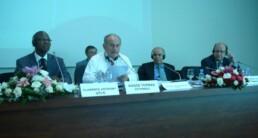
214 dirigeants locaux et régionaux de 40 pays se réunissent à Rabat
Le 12e Bureau Exécutif de CGLU, accueilli par la Ville de Rabat (Maroc), a été officiellement ouvert par Fathallah Oualalou, Maire de Rabat. Comptant sur la présence de plus de 300 participants et incluant plus de 200 dirigeants locaux et régionaux de tous les continents, le Bureau Exécutif se tient du 22 au 24 juin dans la capitale du Maroc. Il s´agit de la première réunion statutaire du Bureau après le renouvellement des Organes Statutaires de l´Organisation lors du Congrès Mondial de Mexico en novembre 2010.
L´un des principaux résultats du Bureau est la nomination de Josep Roig, Secrétaire Général de Métropolis, au poste de Secrétaire Général de CGLU. Le Président de CGLU, Kadir Topbas, a exprimé la confiance que porte l´Organisation Mondiale à M. Roig et à sa capacité de mener à bien les travaux de CGLU. Le Secrétaire Général de CGLU nouvellement nommé a exprimé son honneur d´être choisi pour ce poste et a affirmé son intérêt à travailler avec tous les membres et régions afin de rendre l´Organisation Mondiale encore plus forte.
Le Bureau Exécutif était présidé par Kadir Topbas, Maire d´Istanbul (Turquie) et Président de CGLU, par le Co-président Antonio Costa, Maire de Lisbonne (Portugal) et par Fathallah Oualalou, Maire de Rabat (Maroc).
Le jeudi 23, la session d´ouverture était dédiée au thème de l´innovation pour les gouvernements locaux et régionaux. Cette session a inclus des présentations de Wan Qingliang, Co-présdent de CGLU et maire de Canton (Chine), d´Anne-Marie Jorritsma, maire d´Almere (Pays-Bas) et Présidente de l´Association des Municipalités Néerlandaises, et d´invités spéciaux de la Banque Mondiale, de Cities Alliance ainsi que de représentants des gouvernements nationaux et des institutions financières.
Dans son discours d´ouverture, le Président de CGLU, Kadir Topbas, Maire d´Istanbul, a résumé l´action de la Présidence de CGLU depuis le Congrès Mondial à Mexico en trois piliers : diriger l´Organisation ; accroître les adhésions et être le porte-parole des gouvernements locaux sur la scène internationale. Le Président Topbas a fait part du besoin de promouvoir des gouvernements locaux démocratiques forts, au service des citoyens dans le monde entier. Il a souligné les évolutions positives des relations entre les Nations Unies et CGLU et a rappelé que Ban Ki Moon avait récemment défini CGLU comme un « allié mondial » des Nations Unies lors de la Conférence des Maires des Etats-Unis. Il a par ailleurs mis en lumière le travail important effectué par CGLU dans la mise à jour de l´agenda sur la durabilité, la définition de la culture en tant que 4e pilier du développement durable, le renouvellement de l´agenda sur l´efficacité de l´aide et la question cruciale de la santé et de l´accès aux services de base.
Le Bureau Exécutif est convenu de créer une Commission Permanente sur l´Egalité des Genres, afin de favoriser la participation des femmes aux processus de prise de décision locale et de renforcer le rôle des femmes élues dans tous les travaux de CGLU.
Le séminaire régional sur le financement des infrastructures en Afrique a rassemblé 80 dirigeants locaux de la plupart des régions d´Afrique et a formulé des recommandations sur l´infrastructure urbaine en Afrique.
Les membres ont par ailleurs donné leur accord sur le choix du thème du 3e Rapport Mondial sur la Démocratie Locale et la Décentralisation (GOLD III), qui se centrera donc sur la gouvernance des services publics de base. Le Bureau Exécutif a enfin consacré une journée entière à la redéfinition des priorités stratégiques de CGLU, après ses six premières années d´existence.
Les dirigeants de CGLU ont enfin lancé un appel à la solidarité et ont dénoncé la situation des populations civiles victimes de destructions et d´oppression de la part de leur gouvernement, en particulier à l´heure actuelle dans les pays du bassin méditerranéen et au Moyen-Orient.
Cités et Gouvernements Locaux Unis (CGLU) est la plus grande organisation de gouvernements locaux et régionaux dans le monde. CGLU représente et défend les intérêts des gouvernements locaux sur la scène mondiale, quelle que soit la taille des collectivités qu´elle appuie. L´organisation s´est fixé la mission d´être la voix unifiée et le défenseur de l´autonomie locale démocratique, de promouvoir ses valeurs, ses objectifs et ses intérêts, au travers de la coopération entre les gouvernements locaux, comme au sein de la communauté internationale.
214 local and regional leaders from 40 countries come together in Rabat
The 12th UCLG Executive Bureau, hosted by the City of Rabat (Morocco), was officially opened on Thursday 23rd June by Fathallah Oualalou, Mayor of Rabat. Counting with over 300 participants, including 200 local and regional leaders from 40 countries from all continents, the Executive Bureau took place from 22 to 24 June in the capital city of Morocco.
The UCLG Executive Bureau comprises 115 members from around the world and meets twice a year. This statutory meeting was the first meeting of the Executive Bureau after the renewal of the Governing Bodies in Mexico last November.
One of the main decisions of the Bureau was the appointment of Josep Roig, Secretary General of Metropolis, as the new Secretary General of UCLG. The President of UCLG, Kadir Topbas, expressed the trust that the Organisation was putting in Mr Roig´s great capacity to carry forward the work of UCLG. The appointed Secretary General expressed his honour to be selected and his intention to work with all members and regions to make the World Organisation stronger.
The Executive Bureau was chaired by Kadir Topbas, Mayor of Istanbul (Turkey) and President of UCLG, by Co-President Antonio Costa, Mayor of Lisbon (Portugal) and by Fathallah Oualalou, Mayor of Rabat (Morroco).
On Thursday 23rd, the opening session was dedicated to local and regional governments´ working towards innovation, with presentations of Wan Qingliang, Co-President of UCLG and Mayor of Guangzhou (China), Anne-Marie Jorritsma, Mayor of Almere (Netherlands) and President of the Association of Dutch Municipalities, as well as special guests of the World Bank, Cities Alliance and representatives of national governments and financial institutions.
In his opening address, the President of UCLG, Kadir Topbas, Mayor of Istanbul, summarised the efforts of the UCLG Presidency to work on three pillars: leading the organisation; promoting membership and bringing the voice of the World Organisation before the international community. President Topbas mentionned the need to promote strong local democratic governments at the service of the citizens worldwide. He stressed the positive developments in UCLG relations with the UN and he quoted Ban Ki Moon who defined UCLG as a global ally of the United Nations in recent meetings with US mayors. He further highlighted the important work before us in updating the sustainability agenda, introducing culture as the fourth pillar of sustainable development, renewing the aid effectiveness agenda and addressing the issue of health and access to basic services.
The Executive Bureau further agreed to create a Standing Committee on Gender Equality in order to truly push forward the participation of women in local decision making and to boost up the role of women leaders in all the work of UCLG.
The regional workshop on financing infrastructure investment in Africa brought together 80 local leaders of most countries in the continent and made recommendations on urban infrastructure finance in Africa.
Members further agreed to devote the Third Global Report on Local Democracy and Decentralization (GOLD III) to the Governance of Local Public Services. The Executive Bureau also dedicated a full day to redefining strategic priorities of the Organization after the first six years of existence.
The UCLG leadership called for solidarity and denounced the situation of the civilian populations which are suffering oppression and destruction by their governments, in particular currently in some countries of the Mediterranean and Middle East.
United Cities and Local Governments (UCLG) is the biggest organization of local and regional governments in the world. UCLG represents and defends the interests of local governments on the world stage, regardless of the size of the communities they serve. UCGL´s mission is to be the united voice and world advocate of democratic local self-government, promoting its values, objectives and interests, through cooperation between local governments, and within the wider international community.
214 líderes locales y regionales de 40 países se reúnen en Rabat
El 12º Bureau Ejecutivo de CGLU, organizado en la Ciudad de Rabat (Marruecos), fue inaugurado oficialmente el jueves 23 de junio por Fathallah Oualalou, Alcalde de Rabat. Con más de 300 participantes, incluyendo 200 líderes locales y regionales provenientes de 40 países de todos los continentes, el Bureau Ejecutivo se celebró del 22 al 24 de junio en la capital de Marruecos.
El Bureau Ejecutivo de CGLU se compone de 115 miembros procedentes de todo el mundo y se reúne dos veces al año. Esta reunión estatutaria fue la primera reunión del Bureau Ejecutivo tras la renovación en noviembre de los Órganos de Gobierno en México.
Una de las principales decisiones del Bureau Ejecutivo fue la nominación de Josep Roig, Secretario General de Metropolis, como nuevo Secretario General de CGLU. El Presidente de CGLU, Kadir Topbas, expresó la confianza que la Organización tiene en la capacidad del Sr. Roig para seguir desarrollando el trabajo de CGLU. El Secretario General designado expresó el honor que implica haber sido elegido y afirmó su intención de trabajar con todos los miembros y todas las regiones para reforzar la Organización Mundial.
El Bureau Ejecutivo fue presidido por Kadir Topbas, Alcalde de Estambul (Turquía) y Presidente de CGLU, por el Copresidente Antonio Costa, Alcalde de Lisboa (Portugal) y por Fathallah Oualalou, Alcalde de Rabat (Marruecos).
El jueves 23, la sesión de apertura se centró en el tema de los gobiernos locales y regionales trabajando por la innovación y constó con presentaciones de Wan Qingliang, Copresidente de CGLU y Alcalde de Guangzhou (China), Anne-Marie Jorritsma, Alcaldesa de Almere y Presidenta de la Asociación de Municipios de los Países Bajos, e invitados destacados del Banco Mundial y de la Alianza de las Ciudades, así como representantes de los gobiernos nacionales y de las instituciones financieras.
En su discurso de apertura, el Presidente de CGLU, Kadir Topbas, Alcalde de Estambul, resumió los esfuerzos de la Presidencia de CGLU para trabajar en tres ejes: liderar la Organización; promover la membresía y representar la voz de la Organización Mundial ante la comunidad internacional. El Presidente Topbas mencionó la necesidad de promover gobiernos locales democráticos fuertes y al servicio de los ciudadanos en el mundo. Subrayó los desarrollos positivos en las relaciones entre CGLU y la ONU y mencionó a Ban Ki Moon, quien definió, en unas reuniones celebradas recientemente con Alcaldes estadounidenses, a CGLU como un aliado mundial de las Naciones Unidas. Aludió también al importante trabajo que queda por hacer: actualizar la agenda de la sostenibilidad, introducir la cultura como cuarto pilar del desarrollo sostenible, renovar la agenda de la eficacia de la ayuda y encontrar una respuesta al problema de la salud y del acceso a los servicios básicos.
El Bureau Ejecutivo aprobó asimismo la creación de una Comisión Permanente de Igualdad de Género en aras de fomentar la participación de las mujeres en el proceso de toma de decisiones locales y el papel de las mujeres líderes en todo el trabajo de CGLU.
El taller regional sobre la financiación de las infraestructuras de inversión en África reunió a 80 líderes locales de numerosos países del continente y formuló un conjunto de recomendaciones sobre las finanzas de las infraestructuras urbanas en África.
Les miembros acordaron asimismo dedicar el Tercer Informe Mundial sobre la Democracia Local y la Descentralización (GOLD III) al tema de la gobernanza de los servicios públicos locales. El Bureau Ejecutivo dedicó además un día entero a la redefinición de las prioridades estratégicas de la Organización tras sus seis primeros años de existencia.
Los líderes de CGLU hicieron un llamamiento a la solidaridad y denunciaron la situación de las poblaciones civiles que sufren opresión y destrucción por parte de sus gobiernos, particularmente hoy en día en algunos países del Mediterráneo y de Oriente Medio.
Ciudades y Gobiernos Locales Unidos (CGLU) es la mayor organización de gobiernos locales y regionales en el mundo. CGLU se erige en portavoz de todos los tipos de gobiernos locales, cualquiera sea el tamaño de las comunidades a las que sirven, representando y defendiendo sus intereses en el plano global. La misión de CGLU es ser la voz unida y la representación mundial de los gobiernos locales autónomos y democráticos, promoviendo sus valores, objetivos e intereses, a través de la cooperación entre los gobiernos locales y ante la vasta comunidad internacional.
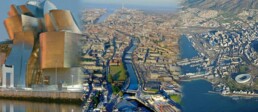
Bilbao est finaliste pour la « World Design Capital 2014 »
Bilbao est choisi comme finaliste avec Cape Town (Afrique du Sud) et Dublin (Irlande) devenir la « World Design Capital 2014 » (WDC 2014). 56 villes de 24 pays ont exprimé leur intérêt à être la « World Design Capital 2014 » et Bilbao est resté finaliste avec les autres deux villes. La Ville pourra se transformer en référence de la conception internationale.
Au mois d´octobre à Taïpeh (Taiwan) dans le Congrès 2011 de l´AIF le Conseil International des Sociétés de Conception Industrielle (ICSID) annoncera la ville gagnante. Ce congrès aura lieu entre les 24 et 26 octobre.
La désignation comme « World Design Capital », qui jusqu´à présent a retombé les villes de Turin (2008), Séoul (2010) et Helsinki (2012), il suppose la reconnaissance internationale des villes qui utilisent la conception d´une manière effective et efficace pour promouvoir la revitalisation et l´amélioration de la qualité de vie de la citoyenneté
Après la présélection des trois villes finalistes, dans les prochains mois ils seront visités par le Comité Organisateur du « World Design Capital » (WDC) et on complétera la sélection des villes finalistes, une dont sera nommé Capital Mondial de la Conception, dans les actes programmés à l´occasion de l´exposé International de la Conception qui aura lieu à Taiwan à la fin du mois d´octobre.
La devise de Bilbao : La Conception de Villes proposée pour « Bilbao World Design Capital 2014 »; il suppose la continuation de l´effort en pour préparer Bilbao pour les défis du futur. Bilbao est un point de référence la conception et de la transformation urbaine. La transformation urbaine incroyable que Bilbao a éprouvée durant les dernières 25 années, suppose un contexte approprié pour faire valoir la « World Design Capital 2014 (WDC2014) » et un moment clef pour une nouvelle transformation guidée par la conception qui porte à la ville vers une économie créative basée la connaissance.
Source : www.bilbaointernational.com
Bilbao selected as finalist to become the World Design Capital in 2014
Following deliberations on 9 June 2011, the International Council of Societies of Industrial Design (Icsid) has the pleasure to announce on behalf of the members of the World Design Capital® (WDC) Selection Committee that the cities of Bilbao (Spain), Cape Town (South Africa) and Dublin (Ireland) have been selected as the three shortlisted cities that will move on to the next round of evaluation in the bid to becoming the World Design Capital in 2014.
In 2014 selection of World Design Capital will be the fourth appointment by Icsid of this biennial designation to a city, in recognition of its accomplishments in using design as a catalyst for development and reinvention, as well as for improving its social, cultural and economic environments.
After a comprehensive review of all bids submitted, the cities of Bilbao, Cape Town and Dublin distinguished themselves not only by demonstrating their individual approaches towards design in their cities, but also managed to convey the impact of these on the various aspects of social, cultural and economic life, as well as provided three very unique visions for how design will continue to reinvent their urban landscape. Furthermore, these cities demonstrated that they possessed the expertise, infrastructure and financial capabilities to successfully develop and implement an inspiring yearlong programme of international design related events, promoting design, as well as their city, on an international stage; and finally, illustrated how their citizens have and will continue to benefit from their cityʼs achievements in design.
"It was a difficult decision, but the WDC Selection Committee has shortlisted three incredibly well thought-out and all-together remarkable bids that have created unique competitive advantages for their cities through design," expressed Martin Darbyshire, WDC Organising Committee member and Icsid Executive Board Member. "These proposals have conveyed very workable and deliverable plans to use design as a means to reinvigorate their cityʼs social, cultural and economic development."
"The Bilbao City Hall, the Provincial Government of Bizkaia and the Basque Government would like to express their great enthusiasm on being shortlisted to be the World Design Capital in 2014," stated Iñaki Azkuna, Mayor of Bilbao. "Design innovation has become an essential tool to improve the competitiveness and quality of life in cities, and is necessary to enhance collaborative public-private environments with direct participation from the administrations, universities and different economic and professional agents. This is the direction Bilbao has followed to achieve its transformation over the past 25 years, and this designation will help continue the rejuvenation of our great city."
The next step in the process leading up to the final selection of the 2014 WDC designation is the city visits that will be conducted in July 2011 by members of the WDC Organising Committee. These site inspections will enable further information to be gathered in an attempt to provide the WDC Selection Committee with a more thorough understanding of the proposed programmes by each of the shortlisted cities prior to the final selection in August 2011.
The official announcement of the 2014 World Design Capital designated city will be on 26 October during the 2011 International Design Alliance (IDA) Congress in Taipei, Taiwan (Chinese Taipei).
Source: www.bilbaointernational.com
Bilbao es finalista a Capital Mundial del Diseño 2014
Bilbao está seleccionada como finalista junto a Cape Town (Sudáfrica) y Dublín (Irlanda) para convertirse en Capital Mundial del Diseño 2014 (WDC 2014). 56 ciudades de 24 países han expresado su interés en ser Capital Mundial del Diseño en el 2014 y Bilbao ha quedado finalista junto a las otras dos ciudades. La Villa podrá convertirse en referencia del diseño internacional.
En el mes de Octubre en Taipei (Taiwán) en el Congreso 2011 de la AIF el Consejo Internacional de Sociedades de Diseño Industrial (ICSID) anunciará la ciudad ganadora. Este congreso tendrá lugar entre los días 24 y 26 de octubre.
La iniciativa ha sido respaldada por el Ayuntamiento de Bilbao, la Diputación Foral de Bizkaia y el Gobierno Vasco, con la colaboración, entre otros, de Creativity Zentrum, Cebek, la Cámara de Comercio, los colegios oficiales de arquitectos y economistas, el ámbito universitario y distintas instituciones públicas y privadas vinculadas a la innovación, el diseño y el desarrollo empresarial.
La designación de la Capital Mundial del Diseño, que hasta ahora ha recaído en las ciudades de Turín (2008), Seúl (2010) y Helsinki (2012), supone el reconocimiento internacional de las ciudades que utilizan el diseño de una forma efectiva y eficiente para impulsar la revitalización y la mejora de la calidad de vida de la ciudadanía.
Tras la preselección de las tres ciudades finalistas, en los próximos meses serán visitadas por el Comité Organizador del World Design Capital (WDC) y se completará la selección de las ciudades finalistas, una de las cuales será nombrada Capital Mundial del Diseño, dentro de los actos programados con motivo de la Exposición Internacional del Diseño que se celebrará en Taiwan a finales del mes de octubre.
El lema Bilbao: El Diseño de Ciudades propuesto para "Bilbao World Design Capital 2014" supone la continuación del esfuerzo en preparar Bilbao para los retos del futuro. Bilbao es un punto de referencia del diseño y la transformación urbana. La increíble transformación urbana que Bilbao ha experimentado en los últimos 25 años, supone un contexto idóneo para acoger la World Design Capital 2014 (WDC2014) y un momento clave para una nueva transformación guiada por el diseño que lleve a la ciudad hacia una economía creativa basada en el conocimiento.
Fuente: www.Bilbaointernational.com
UN declares Internet access a human right
As evidenced by the Facebook Revolutions and ensuing Middle East turmoil, the Internet is a powerful tool and one capable of change. Of course, its eliminating citizen use of the Web under oppressive regimes has also yielded consequences. Perhaps inspired by these effects, the UN has declared the Internet a human right. A recent report titled "Report of the Special Rapporteur on the promotion and protection of the right to freedom of opinion and expression" declares that Internet access falls under freedom of expression.
"The unique and transformative nature of the Internet not only [enables] individuals to exercise their right to freedom of opinion and expression, but also a range of other human rights, and to promote the progress of society as a whole." Special rapporteur Frank La Rue also acknowledges that the Web has become too important a tool to asserting other human rights for people to be denied its use. "Given that the Internet has become an indispensable tool for realizing a range of human rights, combating inequality, and accelerating development and human progress, ensuring universal access to the Internet should be a priority for all states."
While the report may have especially poignant significance for Middle Eastern nations, it applies internationally. "Each state should thus develop a concrete and effective policy to make the Internet widely available, accessible, and affordable to all segments of population." The US National Telecommunications and Information Association (NCIA) are collaborating with the FCC to analyze the state of broadband availability in the country. Recent findings revealed that a five to 10 percent of American cannot access Internet speeds that allow basic Web functions. So if you think this is merely a third-world problem or issue with oppressive governments, you´d be wrong.
Of course, these events are why such a policy has become relevant: "The recent wave of demonstrations in countries across the Middle East and North African region has shown thekey role that the Internet can play in mobilizing the population to call for justice, equality,accountability and better respect for human rights. As such, facilitating access to theInternet for all individuals, with as little restriction to online content as possible, should be apriority for all States."
But is anything going to come out of this report? Last year, a BBC World Service study found that four out of five adults thought Internet access was a fundamental right, and participants from China, Mexico, Nigeria, Brazil, and South Korea were just among some of the countries that majorly agreed with this. Which means that despite these largely held beliefs, opponents are still denying people this alleged right.
www.telecomcomments.com