

ICT for next generation Cities
The challenge of fast urbanization is opening the way for the development of highly "smarter" cities, as more and more of its services rely on emerging technologies. The differentiating factor that can make cities "smart" is the integrated usage of information and communication technologies (ICT) in optimizing the flow of information between seven critical city infrastructure services: administration, education, healthcare, public safety, real estate, transportation, and utilities. By implementing initiatives based on this information to enhance efficiency and performance of these services to the citizen you create cities that are "smarter."
From the administration point of view a smart city will have a reliable system to reach the citizens effectively, to receive feedback, to collect data, to generate statistics and to properly communicate political decisions in a transparent manner. This will support decisions makers with the necessary knowledge required to make acute and quick decisions on city planning and maintenance.
Use of ICT in education services will improve the quality and experience while reducing costs. In developing countries, providing internet access to the educational resources will increase attendance, especially when targeting rural populations surrounding the city or individuals who cannot participate to daily courses. Usage of digital content and collaboration technologies will reduce costs while providing a higher quality and improved experience.
Smart healthcare systems can provide faster and more reliable services. Using scalable storage systems and wide communication platform, patient records con be stored and shared with any medical unit which requires them. Also the communication platform can be used to improve response time in case of emergency services. This is key during a time where epidemics are spreading across cities and information of patient diagnosis is pivotal to diagnosing and treating new patients.
Public safety can make use of communication technologies to reduce deployment time of the emergency response units. In the same time the communication network could be use to relay real-time information between dispatchers and filed units. While dispatchers have access to information via desktop computers, field units can access the network via handheld devices. Public safety services can also make use of closed-circuit television (CCTV) combined with video analytics and global positioning services in order to optimize deployment time. All of these allow for effective, immediate transition of data so that disturbances can be identified and controlled in an aggressive manner.
In real estate ICT can help reduce operating costs by using management systems to automate heating, cooling and illumination. Through motion, temperature, and weight censoring, lighting and cooling units can be controlled to operate at the most efficient levels. From inception, computer modeling will help in building design and identifying appropriate materials, architectural design as well adherence and reporting to relative green building certifications such as LEED.
Transportation can benefit from reduced traffic congestion and more efficient public transport by implementing smart computing technologies like congestion pricing. By passing through electronically controlled tolls, drivers pay more to use more congested roads in rush hours. Not only it reduces traffic congestion, but reduces the environmental impact of the transportation service while raising funds for the public transport.
Utilities can make use of smart grids to optimize water, gas and electricity consumption. Smart grids help identify water leaks and electricity losses. Also, transparency in the measurements towards the consumers can help in responsible usage behaviors and improve demand side management. Replacement of the carbon-intensive fuels with renewable energy can also contribute to "smarter" utilities by ensuring they are tapping into endless resources.
For the success of a smart city project ICT must be at the core of city planning and design. You cannot manage what you cannot measure, and you cannot accurately measure in real time without effective ICT tapping into all aspects of your city and aggregating the data.
Source: www.theurbanvision.com/

ICT for next generation Cities
The challenge of fast urbanization is opening the way for the development of highly "smarter" cities, as more and more of its services rely on emerging technologies. The differentiating factor that can make cities "smart" is the integrated usage of information and communication technologies (ICT) in optimizing the flow of information between seven critical city infrastructure services: administration, education, healthcare, public safety, real estate, transportation, and utilities. By implementing initiatives based on this information to enhance efficiency and performance of these services to the citizen you create cities that are "smarter."
From the administration point of view a smart city will have a reliable system to reach the citizens effectively, to receive feedback, to collect data, to generate statistics and to properly communicate political decisions in a transparent manner. This will support decisions makers with the necessary knowledge required to make acute and quick decisions on city planning and maintenance.
Use of ICT in education services will improve the quality and experience while reducing costs. In developing countries, providing internet access to the educational resources will increase attendance, especially when targeting rural populations surrounding the city or individuals who cannot participate to daily courses. Usage of digital content and collaboration technologies will reduce costs while providing a higher quality and improved experience.
Smart healthcare systems can provide faster and more reliable services. Using scalable storage systems and wide communication platform, patient records con be stored and shared with any medical unit which requires them. Also the communication platform can be used to improve response time in case of emergency services. This is key during a time where epidemics are spreading across cities and information of patient diagnosis is pivotal to diagnosing and treating new patients.
Public safety can make use of communication technologies to reduce deployment time of the emergency response units. In the same time the communication network could be use to relay real-time information between dispatchers and filed units. While dispatchers have access to information via desktop computers, field units can access the network via handheld devices. Public safety services can also make use of closed-circuit television (CCTV) combined with video analytics and global positioning services in order to optimize deployment time. All of these allow for effective, immediate transition of data so that disturbances can be identified and controlled in an aggressive manner.
In real estate ICT can help reduce operating costs by using management systems to automate heating, cooling and illumination. Through motion, temperature, and weight censoring, lighting and cooling units can be controlled to operate at the most efficient levels. From inception, computer modeling will help in building design and identifying appropriate materials, architectural design as well adherence and reporting to relative green building certifications such as LEED.
Transportation can benefit from reduced traffic congestion and more efficient public transport by implementing smart computing technologies like congestion pricing. By passing through electronically controlled tolls, drivers pay more to use more congested roads in rush hours. Not only it reduces traffic congestion, but reduces the environmental impact of the transportation service while raising funds for the public transport.
Utilities can make use of smart grids to optimize water, gas and electricity consumption. Smart grids help identify water leaks and electricity losses. Also, transparency in the measurements towards the consumers can help in responsible usage behaviors and improve demand side management. Replacement of the carbon-intensive fuels with renewable energy can also contribute to "smarter" utilities by ensuring they are tapping into endless resources.
For the success of a smart city project ICT must be at the core of city planning and design. You cannot manage what you cannot measure, and you cannot accurately measure in real time without effective ICT tapping into all aspects of your city and aggregating the data.
Source: www.theurbanvision.com/
ICT for next generation Cities
The challenge of fast urbanization is opening the way for the development of highly "smarter" cities, as more and more of its services rely on emerging technologies. The differentiating factor that can make cities "smart" is the integrated usage of information and communication technologies (ICT) in optimizing the flow of information between seven critical city infrastructure services: administration, education, healthcare, public safety, real estate, transportation, and utilities. By implementing initiatives based on this information to enhance efficiency and performance of these services to the citizen you create cities that are "smarter."
From the administration point of view a smart city will have a reliable system to reach the citizens effectively, to receive feedback, to collect data, to generate statistics and to properly communicate political decisions in a transparent manner. This will support decisions makers with the necessary knowledge required to make acute and quick decisions on city planning and maintenance.
Use of ICT in education services will improve the quality and experience while reducing costs. In developing countries, providing internet access to the educational resources will increase attendance, especially when targeting rural populations surrounding the city or individuals who cannot participate to daily courses. Usage of digital content and collaboration technologies will reduce costs while providing a higher quality and improved experience.
Smart healthcare systems can provide faster and more reliable services. Using scalable storage systems and wide communication platform, patient records con be stored and shared with any medical unit which requires them. Also the communication platform can be used to improve response time in case of emergency services. This is key during a time where epidemics are spreading across cities and information of patient diagnosis is pivotal to diagnosing and treating new patients.
Public safety can make use of communication technologies to reduce deployment time of the emergency response units. In the same time the communication network could be use to relay real-time information between dispatchers and filed units. While dispatchers have access to information via desktop computers, field units can access the network via handheld devices. Public safety services can also make use of closed-circuit television (CCTV) combined with video analytics and global positioning services in order to optimize deployment time. All of these allow for effective, immediate transition of data so that disturbances can be identified and controlled in an aggressive manner.
In real estate ICT can help reduce operating costs by using management systems to automate heating, cooling and illumination. Through motion, temperature, and weight censoring, lighting and cooling units can be controlled to operate at the most efficient levels. From inception, computer modeling will help in building design and identifying appropriate materials, architectural design as well adherence and reporting to relative green building certifications such as LEED.
Transportation can benefit from reduced traffic congestion and more efficient public transport by implementing smart computing technologies like congestion pricing. By passing through electronically controlled tolls, drivers pay more to use more congested roads in rush hours. Not only it reduces traffic congestion, but reduces the environmental impact of the transportation service while raising funds for the public transport.
Utilities can make use of smart grids to optimize water, gas and electricity consumption. Smart grids help identify water leaks and electricity losses. Also, transparency in the measurements towards the consumers can help in responsible usage behaviors and improve demand side management. Replacement of the carbon-intensive fuels with renewable energy can also contribute to "smarter" utilities by ensuring they are tapping into endless resources.
For the success of a smart city project ICT must be at the core of city planning and design. You cannot manage what you cannot measure, and you cannot accurately measure in real time without effective ICT tapping into all aspects of your city and aggregating the data.
Source: www.theurbanvision.com/
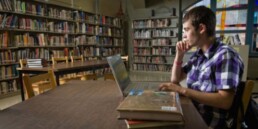
Medellín: connectivité sans fil dans l´éducation
La mise en œuvre du réseau haut débit sans fil Motorola met certainement la preuve que la récente sélection de Medellin dans le classement des villes numériques Motorola comme l´une des 25 villes avec un niveau plus élevé de la numérisation en Amérique latine, n´est pas une simple coïncidence, mais le résultat un engagement fort. L´engagement de Motorola est fier de suivre grâce à la technologie.
«La numérisation n´est pas une caractéristique unique dans les grandes villes ou des pays avec une plus grande pénétration du PIB et plus de services de télécommunications, comme la systématisation des processus tels que l´éducation est un attribut qui peut être adapté à toute municipalité, car aujourd´hui De nos jours la technologie est souple et applicable à n´importe quelle ville et de la géographie », a déclaré Manuel Riaño, directeur régional des services à large bande et mobiles, Motorola, et ajoute:« Motorola est fier de participer à des initiatives comme celle que peut fournir une meilleure éducation aux jeunes en Colombie. "
Techniquement, la mise en œuvre de ce réseau ont été utilisés ponts sans fil de la série 300 PTP Motorola OFDM et des équipements qui permettent aux fonctionnalités avancées, fournissant des services fiables, de connectivité de haute performance, même de niveau entrave ou élevés d´interférence. Ces systèmes offrent d´excellentes options pour les entreprises et les gouvernements qui ont besoin de maintenir la connectivité entre les bâtiments, l´accès à Internet haute vitesse et des applications de liaison, la voix sur IP, multimédia et vidéo.
Ainsi, cette nouvelle étape, la capitale d´Antioquia poursuit sa mars vers une société qui utilise les ressources technologiques et offre à ses habitants de nouvelles et meilleures possibilités d´éducation.
Source: Les technologies éducatives
Medellín: wireless connectivity in education
The implementation of wireless broadband network puts Motorola certainly evidence that the recent selection of Medellin in the Digital Cities Motorola ranking as one of the 25 cities with a higher level of digitalization in Latin America, is not mere coincidence but the result a strong commitment. Commitment Motorola is proud to follow through technology.
"Digitization is not a feature unique to big cities or countries with higher GDP and greater penetration of telecommunications services, as the systematization of processes such as education is an attribute that can be adapted to any municipality, because today These days the technology is flexible and applicable to any city and geography, "said Manuel Riaño, regional manager of Broadband and Mobile Computing, Motorola, and adds," Motorola is proud to participate in initiatives like this that can provide better education to young people in Colombia. "
Technically, the implementation of this network were used wireless bridges PTP 300 Series Motorola OFDM and equipment that enable advanced features, providing reliable, high performance connectivity, even in obstructed or high level of interference. These systems offer excellent options for companies and governments who need to maintain connectivity between buildings, access to high-speed Internet and backhaul applications, voice over IP, multimedia and video.
Thus this new step, the capital of Antioquia continues its march toward a society that uses technology resources and provides its residents new and better possibilities of education.
Source: Educational technologies
Medellín: conectividad wireless en la educación
16 instituciones educativas de primer nivel podrán acceder a las bibliotecas y centros de documentación de 3 entidades de educación superior.
La unidad Soluciones de Movilidad para Empresas y Gobiernos de Motorola anuncia que más de 1800 estudiantes de 16 instituciones educativas de Medellín se verán beneficiados con acceso a diversos servicios y aplicaciones como: Voz sobre IP, vídeo conferencia y audio conferencia, acceso a bibliotecas digitales, servicios web y aulas virtuales de las instituciones de educación superior: Universidad EAFIT, Tecnológico de Antioquia, el Politécnico Jaime Isaza Cadavid y el SENA, gracias a la red de banda ancha inalámbrica Motorola que hará posible la interconexión entre todas estas instituciones.
Al respecto, el Secretario de Educación Felipe Andrés Gil Barrera afirmó que "este tipo de iniciativas contribuyen a mejorar los procesos educativos, donde la tecnología es clave para el desarrollo de los jóvenes. La estructuración de la red Motorola permitirá que el programa Alianza Futuro Digital sea el motor de la educación en la región".
Este proyecto de conectividad y transferencia de conocimiento está alineado a la estrategia de Medellín Digital y es un componente de la Alianza Futuro Digital Medellín, proyecto que busca la transformación y articulación de la educación básica, técnica (media y profesional) y tecnológica con el clúster de la tecnología. Su objetivo es implementar un modelo educativo basado en competencias, que permita ofrecer una formación flexible y pertinente que combine alternativas de estudio y trabajo, con el propósito de mejorar la cobertura, permanencia, pertinencia y calidad de la educación en Medellín, soportado en el acompañamiento del sector empresarial representado por el sector tecnológico y su estrategia de internacionalización.
Fuente: Tecnologías educativas
La implementación de red de banda ancha inalámbrica Motorola sin duda pone evidencia que la reciente selección de Medellín en el ranking Motorola de Ciudades Digitales, como una de las 25 ciudades con un mayor nivel de digitalización en América Latina, no es mera coincidencia sino el resultado de un compromiso decidido. Compromiso que Motorola se siente orgulloso de acompañar a través de su tecnología.
"La digitalización no es una característica exclusiva de las grandes ciudades ni de los países con mayor PIB o mayor penetración de servicios de telecomunicaciones, dado que la sistematización de procesos como el educativo es un atributo que se puede adaptar a cualquier municipio, ya que hoy en día las tecnologías son flexibles y aplicables a cualquier tipo de ciudad y geografía", afirma Manuel Riaño, Gerente regional de Banda Ancha y Computación Móvil de Motorola, y agrega, "para Motorola es un orgullo poder participar en iniciativas como esta que permiten brindar mejores condiciones educativas a los jóvenes de Colombia".
A nivel técnico, en la implementación de esta red fueron utilizados puentes inalámbricos de la serie PTP 300 y equipos OFDM de Motorola, que permiten funciones avanzadas, brindando conectividad confiable de alto rendimiento, aún en entornos obstruidos o con alto nivel de interferencias. Estos sistemas ofrecen excelentes opciones para empresas y gobiernos que necesitan mantener la conectividad entre edificios, acceso a Internet de alta velocidad, y aplicaciones de backhaul, voz sobre IP, multimedia y video.
Es así como con este nuevo paso, la capital de Antioquia continúa su marcha hacia una sociedad que aprovecha los recursos tecnológicos y brinda a sus habitantes nuevas y mejores posibilidades de educación.
71 pour cent de la population mondiale utilise le mobile
Au total, deux milliards de personnes ont déjà accès à Internet à travers le monde
Au Consumer Electronics Show (CES) qui s´est tenue quelques jours à Las Vegas, président de Verizon, Ivan Seidenberg a indiqué que 71 pour cent de la population mondiale utilise déjà téléphone mobile et de deux milliards de personnes ont accès à Internet. Toutefois, s´il ya quelque chose d´être imposé cette année 2011 est le réseau sans fil 4G, grâce à la vague de lancements de produits les opérateurs mobiles à répondre à la demande des consommateurs. En Navas Gloria
71 pour cent de la population mondiale, soit environ cinq milliards de personnes utilisent des téléphones mobiles et 2.000 millions de personnes ont accès à Internet. Cela a été une des idées prises par le Consumer Electronics Show (CES), qui s´est tenue ces jours-ci à Las Vegas.
Selon le Centre de recherche et d´innovation dans les télécommunications (Cinit) 2011 Président et chef de la direction de la société Verizon (une des plus grandes sociétés dans le monde), Ivan Seidenberg, a déclaré dans son discours, a également assisté par les administrateurs d´autres sociétés il ya dix ans l´Internet haut débit existait à peine et seulement un Américain sur trois a ce service.
Face à ces données, maintenant neuf personnes sur dix bénéficier de ce service et ce à l´origine du trafic des communications sans fil à double chaque année. De même, les ventes de smartphones sont de plus en plus de 90 pour cent par an.
Et si quelque chose de cette année va imposer, c´est le réseau sans fil 4G, explique qu´il CBB. Jusqu´à présent, les consommateurs qui ont voulu la saisir, il n´a pas beaucoup de choix avec les dispositifs qui ont été sur le marché. Cette dynamique va changer de façon spectaculaire cette année grâce à une vague de lancements de produits les opérateurs mobiles qui cherchent à répondre à la demande croissante des consommateurs pour le haut débit sans fil plus rapide et d´attirer plus de revenus du trafic de données.
Internet Internet
En outre, Seidenberg a déclaré qu´il ya cinq ans, la transmission vidéo sur Internet ne représentait que 10 pour cent de tout le trafic sur le réseau, mais maintenant ajouter la moitié et peut atteindre 90 pour cent dans un avenir proche.
L´exécutif a annoncé que très bientôt la télévision en trois dimensions est le plus commun, comme les maisons intelligentes, les villes intelligentes, et les machines qui communiquent avec d´autres machines, entre autres.
Le chef de l´exploitation de Verizon, Lowell McAdam, a prédit, à son tour, à participer dans le forum, que dans les cinq ans les clients de son entreprise aura accès à des vitesses de connexion à Internet de 100 gigaoctets. Qui va gérer l´énorme croissance du trafic vidéo dans les années à venir.
D´autre part, Jeff Bewkes, président et chef de la direction de Take Warner, a déclaré lors de sa participation à l´événement que le monde regarde la télévision plus que jamais, et dit qu´il est en train de vivre maintenant le deuxième âge d´or de la télévision. «Tout est en augmentation, y compris le nombre de téléspectateurs, l´annonce, les budgets de programmation et de talent et de qualité», at-il dit.
Bewkes a noté que l´ensemble du contenu visuel qui était auparavant limitée à la télévision, est maintenant en mouvement tous les types de pièces jointes, y compris un téléphone cellulaire.
Source: Tendances en matière de télécommunications
71 percent of the world´s population uses mobile
In total, two billion people already have Internet access worldwide
At the Consumer Electronics Show (CES) held a few days in Las Vegas, president of Verizon, Ivan Seidenberg said that 71 percent of the world´s population already uses mobile phone and two billion people have Internet access. However, if there is something to be imposed this year 2011 is the 4G wireless network, thanks to the wave of product launches mobile operators to meet consumer demand. By Gloria Navas
71 percent of the global population, representing around five billion people use mobile phones and 2,000 million people have Internet access. That has been one of the ideas being taken up by the Consumer Electronics Show (CES), which was held these days in Las Vegas.
According to the Center for Research and Innovation in Telecommunications (Cinit) 2011 President and CEO of the company Verizon (one of the largest companies in the world), Ivan Seidenberg, said in his speech, also attended by directors of other companies ten years ago the broadband Internet barely existed and only one in three Americans had this service.
Faced with this data, now nine out of ten people enjoy this service and this is causing the wireless communications traffic to double every year. Similarly, sales of smartphones are growing 90 percent a year.
And if something from this year is going to impose it is the 4G wireless network, explains that he CBB. Until now, consumers who wanted to seize it did not have much choice with the devices that were in the market. This dynamic will change dramatically this year thanks to a flurry of product launches mobile operators seeking to meet growing consumer demand for wireless broadband faster and attract more revenue from data traffic.
Internet
Moreover, Seidenberg said that five years ago, the Internet video transmission amounted to only 10 percent of the total network traffic, while the middle and now totals may reach 90 percent in the near future.
The executive announced that very soon the three-dimensional television is the most common, like smart homes, smart cities, and the machines that communicate with other machines, among other things.
The chief operating officer of Verizon, Lowell McAdam, predicted, in turn, to participate in the forum, that within five years his company´s customers will have access to internet connection speeds of 100 gigabytes. That will handle the enormous growth in video traffic in the coming years.
On the other hand, Jeff Bewkes, President and CEO of Take Warner, said during his participation in the event that the world is watching more TV than ever and said it is starting to live now the second golden age of television. "Everything is increasing including the number of viewers, the ad, the budgets for programming and talent and quality," he said.
Bewkes noted that all visual content that was previously restricted to television, is now moving all types of attachments, including a cell phone.
Source: Trends in Telecommunications
El 71 por ciento de la población mundial ya utiliza móvil
En total, dos mil millones de personas tienen ya acceso a Internet en todo el mundo
En la Muestra de Electrónica al Consumidor (CES) celebrada hace unos días en Las Vegas, el presidente de Verizon, Ivan Seidenberg apuntó que el 71 por ciento de la población mundial utiliza ya teléfono móvil y dos mil millones de personas tienen acceso a Internet. No obstante, si hay algo que se va imponer este año 2011 es la red inalámbrica 4G, gracias a la oleada de lanzamientos de productos de los operadores móviles para satisfacer la demanda de los consumidores. Por Gloria Navas
El 71 por ciento de la población mundial, lo que supone alrededor de cinco mil millones de personas, utilizan teléfono móvil y 2.000 millones de personas tienen acceso a Internet. Ésa ha sido una de las ideas que se ha recogido en la Muestra de Electrónica al Consumidor (CES), que se ha celebrado estos días en Las Vegas.
Según el Centro de Investigación e Innovación en Telecomunicaciones (Cinit) 2011 el presidente y director ejecutivo de la compañía Verizon (una de las mayores compañías del mundo), Iván Seidenberg, apuntó durante su intervención, en la que participaron también directores de otras compañías, que hace diez años el Internet de banda ancha apenas existía y sólo uno de cada tres norteamericanos contaba con este servicio.
Frente a estos datos, actualmente nueve de cada diez personas disfrutan de este servicio y esto está provocando que el tráfico de las comunicaciones inalámbricas se duplique cada año. Igualmente, las ventas de teléfonos inteligentes están creciendo un 90 por ciento al año.
Y si hay algo que a partir de este año se vaya a imponer eso es la red inalámbrica 4G, señala por su parte CBB. Hasta ahora, los consumidores que querían aprovecharla no tenían demasiadas opciones con los dispositivos que había en el mercado. Esta dinámica va a cambiar drásticamente este año, gracias a una oleada de lanzamientos de productos de los operadores móviles que pretenden satisfacer la creciente demanda de los consumidores de banda ancha inalámbrica rápida y atraer más ingresos por el tráfico de datos.
Internet
Por otra parte, Seidenberg señaló que hace cinco años, la transmisión de vídeos por Internet sumaba apenas el 10 por ciento del total del tráfico en la red; mientras que ahora suma la mitad y puede llegar al 90 por ciento en un futuro cercano.
El ejecutivo adelantó que muy pronto la televisión en tercera dimensión será la más habitual, al igual que las casas inteligentes, las ciudades inteligentes, y las máquinas que dialogan con otras máquinas, entre otras cosas.
El director operativo de Verizon, Lowell McAdam, pronosticó, por su parte, al participar en el foro, que dentro de cinco años los clientes de su compañía podrán tener acceso a velocidades de conexión en internet de 100 gigabytes. Eso permitirá manejar el enorme crecimiento de trafico de vídeo en los próximos años.
Por otro lado, Jeff Bewkes, el presidente y director general de Tome Warner, indicó durante su participación en el evento que el mundo está viendo más televisión que nunca y dijo que se está comenzando a vivir ahora la segunda era dorada de la televisión. "Todo está aumentando incluyendo el número de televidentes, el de anuncios, el de los presupuestos de programación y el del talento y calidad" destacó.
Bewkes recordó que todo el contenido visual que antes estaba restringido a la televisión, se está trasladando ahora a todo tipo de aditamentos, incluyendo el teléfono celular.
Fuente: Tendencias de las Telecomunicaciones
Les avantages d´un 2.0 Santé pour la société
En 3 ans, il a doublé le nombre d´utilisateurs d´Internet recherchent des informations sur la santé sur le Net en 2006, 19% de la population dans l´Union européenne ont utilisé Internet à cette fin, et en 2009, selon le rapport de la Société Information en Espagne 2010, et est de 33% de la population.
Les Espagnols sont concernés, surtout, les maladies, la saine alimentation et les médicaments. Ce sont les trois principaux sujets de recherche sur Internet aux utilisateurs de l´Espagne. En outre, l´évaluation par l´Internet dans notre pays est mieux que le reste de l´Europe, mais en même temps, conscients de la possibilité de trouver de fausses informations qui conduit à la méfiance. "Le problème est que les utilisateurs ont identifié le site de référence de santé, donc pas de doute que c´est une question qui doit aller dans le futur," dit le rapport en référence à une étude semblable qui Pfizer a mené l´ l´an dernier intitulé «Le rôle d´Internet dans le processus de consultation sur la santé de l´information."
Les nouvelles technologies et l´accès au monde en ligne se fait sentir aussi dans les services de santé. L´Union européenne a calculé que son adaptation se traduirait par une économie de 7.500 millions d´euros chaque année en Europe. Un autre attribut important de cette évolution est la réduction de jusqu´à 84% d´erreurs de médication des patients.
Le rapport note Telefónica comme un exemple de l´utilisation de l´e-santé en Espagne pour les dossiers médicaux électroniques, un outil qui est déjà utilisé par presque tous les médecins de famille et pédiatres en Espagne (87%). La demande de rendez-via le réseau a été un autre des avantages majeurs de l´Internet pour le système de santé, et plus de 80% des centres de santé de ce service en cours d´exécution.
Rien de tel avec l´utilisation d´ordonnances électroniques, mais la perspective est de grands avantages tels que la congestion des centres de santé. Selon les estimations, pourraient être réduits jusqu´à 30% des visites aux centres de santé pour ce service afin que les médecins feront plus de temps pour d´autres patients. Et par conséquent, le temps d´attente est également réduite à 16%.
Source: prsalud