


Xi'an Digital Projects
OBJETIVE
Guided by the overarching principle of “validating through construction and demonstrating through application”, the Xi’an Pioneering Pilot Project for Data Circulation and Utilization Infrastructure Development aims to “build a national hub city for data circulation and utilization”. By establishing a “1-3-2-1-N” data circulation and utilization infrastructure system comprising “one foundation base, three processing methods, two circulation platforms, one operational portal, and a number of industry-specific scenarios”, the project seeks to promote high-quality data products and services through exemplary scenario applications, thereby fostering new digital economic formats and models centred on data innovation.
Xi’an Metropolitan Area Smart Digital Platform for Urban Space and Road Transportation Project aims to advance smart transportation development by constructing a unified digital foundation integrating industry-specific networks, systems, and data resources, enabling seamless data sharing and exchange across platforms. Through the establishment of an integrated smart transportation planning-construction-management-operation-maintenance platform, the project digitalizes and streamlines administrative approval for infrastructure upgrades and construction projects. This platform further supports data-driven spatial planning for urban territories, road networks and their ancillary facilities, and industrial layouts, empowering evidence-based decision-making in traffic operation management.
DESCRIPTION OF ACTIONS CARRIED OUT
The projects are divided into two categories. The first focuses on promoting key initiatives in specialised areas, such as data circulation and utilisation infrastructure, the integrated national computing power network, new types of infrastructure to ensure security, and infrastructure that supports forward-looking strategic emerging industries. The second prioritises promoting the implementation of projects in areas such as the comprehensive digital transformation of cities, sector-specific digital transformation, and the promotion of digital industrial clusters.
- Aimed at senior citizens, Xi'an has developed the ‘i Xi'an’ digital government services platform, which focuses on the needs of residents and leverages modern Internet technologies. The platform aims to improve citizens' experience with smart city services, streamline administrative procedures, and provide comprehensive services covering daily life, education, employment, healthcare, and elderly care. The platform has a section dedicated to elderly care, where seniors can easily access information about senior dining halls, community service centres for seniors, and care institutions via their smartphones, while also being able to process retirement paperwork and submit complaints or suggestions online. For rural seniors with disabilities or in poverty, the platform allows them to apply for subsidies online with simplified processes. In addition, Xi'an has launched a pilot programme for smart nursing homes with five key innovations: smart registration, smart dining systems, technology-assisted care, smart security, and digital management. These institutions implement smart applications for multiple scenarios, such as comprehensive admission services with convenient family visitation systems, smart meal selection with dietary planning, and food safety monitoring.
- For citizens in financial difficulty, the ‘i Xi'an’ platform offers free legal assistance services. Users can apply online through the platform to receive professional legal advice and assistance, effectively protecting their legitimate rights and interests.
- For non-local residents, the platform allows them to apply online for the replacement or renewal of their identity card and driving licence through mobile applications, eliminating the need for multiple trips and significantly saving processing time, resulting in a more efficient and convenient service experience.
KEY SUCCESS FACTORS
- Validation and practical demonstration
- Development of advanced digital infrastructures
- Promotion of the data-driven digital economy
- Sectoral and territorial integration
- Focus on citizenship and inclusion
- Innovation in public and social services
- Scalability and replicability
- Contribution to data-driven decision-making
MAIN RESULTS ACHIEVED
The Xi'an Pioneer Pilot Project for the Development of Data Circulation and Utilisation Infrastructure has made the most of the multiplier, cascade and catalyst effects of data elements, creating an integrated solution at the hardware and software product level. This solution enables interconnectivity between sectors and regions, mutual trust and mutual recognition in data circulation and utilisation. The project has validated the feasibility, applicability, ease of use and reusability of fundamental technical pathways by building a centralised, efficient and secure data circulation infrastructure. The demonstration scenarios have catalysed the development of high-quality data products and services, established operational mechanisms for data circulation and utilisation, and fostered a thriving ecosystem of local data service providers, empowering key industries such as equipment manufacturing and cultural tourism with data-driven innovations.
The Xi'an Metropolitan Area Smart Digital Platform for Urban Space and Road Transport project has established a unified ‘single map’ system that integrates planning, land use, railways, motorways, urban railways, municipal roads and other related elements into a comprehensive transport framework. The platform has developed core capabilities for accurate perception, reliable simulation, agile forecasting, refined assessment, and proactive control of metropolitan corridor operations, while improving daily maintenance, asset protection, operational monitoring, safety alerts, and data-driven decision-making capabilities for major motorways, in order to support the expansion of the smart corridor and improve the traffic capacity of major road networks. By building a future-oriented intelligent transport and mobility management and service system, the project has established a dynamic full-spectrum sensing network covering all transport elements, enabling data fusion and application across the sector. It has also promoted the holistic integration of intelligent transport services, ensuring operational consistency, application interoperability and data convergence across the metropolitan area. Ultimately, the platform has achieved coordinated municipal road planning, science-based construction and renovation, intelligent infrastructure management, and precision-guided traffic control and dispatch, fostering a resilient, efficient, and sustainable urban mobility ecosystem.


Montevideo Observatory + Open Data Platform
AIM
- Democratization of information: Provide public access to data and indicators on various aspects of the city
- Government transparency: Improve the transparency of municipal management by making City Hall data accessible in a user-friendly manner
- Support for decision-making: Provide quality data to drive research and informed decision-making in areas such as urban mobility
- Environmental monitoring: Enable public monitoring of the state of ecosystems, water, air, and soil quality
- Improving quality of life: Share health strategies aimed at improving the quality of life of residents and visitors
- Economic development: Boost tourism and the economic and social development of the department through the tourism observatory
- Urban planning: Stimulate innovation in data capture, visualization, and analysis processes for territorial planning
- Cultural promotion: Facilitate access to data on Montevideo's cultural reality, democratizing knowledge about the city's cultural life
Observatorio (https://montevidata.montevideo.gub.uy) /Portal DA (https://ckan.montevideo.gub.uy)
DESCRIPTION OF THE ACTIONS CARRIED OUT
The Montevideo City Council has created a Data Observatory (Montevidata), a platform that facilitates public access to key information on various aspects of the city. This digital space allows citizens, academics, and organizations transparent access to data—made available through the Open Data Portal—ranging from environmental indicators and visualizations to gender equality policies.
At its core, the Environmental Observatory offers information on ecosystems, water, air, and soil quality, while the Health Department uses this tool to share strategies aimed at improving quality of life. It also includes data on urban mobility, fostering research and informed decisions.
Tourism benefits from a dedicated observatory that promotes economic and social development. Likewise, the territorial observatory promotes innovation in urban planning, and the cultural observatory highlights Montevideo's artistic and social richness.
Furthermore, it addresses topics such as socio-labor integration and gender equality, providing information on public employment policies, training, and strategies to build a more equitable city. This observatory represents a step toward more transparent and participatory governance, reflecting the diversity and complexity of Montevideo.
KEY SUCCESS FACTORS
- Support from the authorities for the creation and consolidation of the platform.
- Strong involvement from the various departments of the Municipality, fostering a sense of ownership of the project.
MAIN RESULTS OBTAINED
Validation of the use of new technologies for the benefit of the population; greater transparency and demonstrating actions based on the evidence provided by data analysis and visualizations.

Conceptual Framework – Data Governance Model
AIM
Facilitate the analysis of information held by the administration to anticipate scenarios and formulate management proposals that are more tailored to the needs of citizens.
DESCRIPTION OF THE ACTIONS CARRIED OUT
We are working on defining a conceptual framework that will allow for a data governance model shared by all municipalities in the province of Barcelona with up to 20,000 inhabitants, to ensure equitable use and the necessary territorial cohesion.
We are analyzing the information systems used in municipal management (in the broadest sense) to identify data that can be considered High Value, according to European regulations (economic, social, and environmental areas). This will allow for a data governance model, based on the DAMA methodology, that will allow for efficient management and enable the design of public city policies that foster progress and anticipate scenarios that improve the provision of public services and the living conditions of citizens.
KEY SUCCESS FACTORS
- Political support and professional public management support for organizations.
- Training and awareness-raising for technical specialists.
- The importance of having a data strategy to "remove" data from the traditional concept of being part of an IT solution.
- Predict scenarios, highlighting prior analysis of available information.
MAIN RESULTS OBTAINED
Currently being defined. The support service is scheduled to open on July 1, 2025.

BilbaoAccess
OBJECTIVES
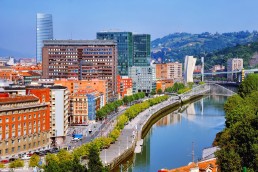
Development and implementation of an automatic vehicle access control system for areas with special traffic conditions in order to regulate and control pedestrian preference zones and thus facilitate coexistence in these areas with the mobility needs of different groups (residents, shopkeepers, hoteliers, etc.).
The first area to be integrated into the new control system was the Old Quarter, and other pedestrian areas of the city will gradually be incorporated.
DESCRIPTION OF ACTIONS CARRIED OUT
• Definition of entry conditions and authorised profiles.
• Identification of the specific needs of Bilbao City Council and the different economic activities affected.
• Development of a Control Centre for the correct management, operation and compliance with access conditions.
• Definition of integrations with municipal and extra-municipal information systems.
• Development of a municipal mobile application so that users can manage their authorisations.
• Installation of 30 Control Points in the Old Town area.
• Development of tests in the 3 municipal environments and coordination with the Municipal Police in order to define the applicable sanctioning process.
KEY SUCCESS FACTORS
• Provision of a Citizen Service Office to provide information, both in person and by telephone, on the conditions of access to the Old Town site.
• Use of different communication strategies (information through municipal channels, information leaflets, etc.) to inform citizens about the implementation of the access control system.
• Clear definition of objectives and scope from the beginning of the project.
• Involvement of the different municipal agents: BilbaoTIK, Public Safety and Economy and Finance.
MAIN RESULTS ACHIEVED
• Promotion of sustainable mobility.
• Reducing the level of vehicles circulating in the Old Town, reducing greenhouse gases and the noise generated by them.
• The reduction in traffic has contributed to an increased sense of security among the elderly and increased local economic activity.
• The automation of registration processes has made it possible to speed up procedures for citizens with mobility needs.
• The automation of control processes has reduced fraud generated by unauthorised access to priority areas.
Bilbao Data Government
OBJECTIVES
Transformation of Bilbao City Council and the Municipal Public Companies into Data-Driven Organisations.
DESCRIPTION OF ACTIONS CARRIED OUT
• Drawing up of a "Bilbao data manifesto", in which the principles of the use of municipal data are set out
• Definition of the municipal data governance model
• Design of the necessary architecture in the medium term
• Benchmarking of tools that facilitate the work of municipal technicians for the preparation and availability of data.
• Definition of the operational model of data governance.
• Implementation of one of the benchmarking tools.
• Implementation of use cases to promote the use of data in daily municipal operations.
KEY SUCCESS FACTORS
• Definition of the data governance strategy and models.
• Definition of roles and the process of adopting them.
• Definition of the logical architecture, definition of phases and study and choice of tools.
• Identification of key users within the organisation.
• Creation of use cases.
• Communication and dissemination tasks.
MAIN RESULTS ACHIEVED
• Establishment of policies and references for the use of municipal data sources. Definition of methodology and procedures.
• Involvement of the different municipal areas (data owners/data stewards).
• Development and implementation of operational control dashboards in the areas.
• Carrying out the first advanced data analyses
• First steps in the development of data literacy, involvement of the whole organisation in data governance.

Bogotá Smart Territory
The Bogotá Smart Territory Policy establishes an implementation horizon from 2023 to 2032, promoting sustainable solutions based on data.
OBJECTIVES
Consolidate Bogotá as a Smart Territory by promoting the use and exploitation of data, technology and innovation by the actors and sectors of the territory, to solve problems and generate opportunities that improve people's quality of life.
DESCRIPTION OF ACTIONS CARRIED OUT
The Bogotá Territorio Inteligente 2023-2032 Public Policy is an initiative led by the High Councillor for ICTs of the General Secretariat of the Office of the Mayor of Bogotá. Its formulation process began in 2021 and went through different phases: preparatory, public agenda and policy formulation. As a result of this process, the final version of the action plan of the Bogotá Smart Territory Public Policy was generated. This action plan includes 7 specific objectives, 7 results and 36 products that will be the responsibility of 14 district entities of the Mayor's Office of Bogotá. The policy was approved on 31 May 2023 and is valid for 10 years.
KEY SUCCESS FACTORS
The Bogotá Smart Territory Policy establishes an implementation horizon from 2023 to 2032, promoting sustainable solutions based on data, technology, and innovation, and seeks an intersectoral intervention for the development of a smart territory in Bogotá.
MAIN RESULTS ACHIEVED
During the process of formulating the Bogotá Smart Territory Policy, the insufficient conditions were identified to develop a collective intelligence based on data, technology and innovation that efficiently responds to the city's problems. Sixty joint construction spaces were held with the participation of more than 24,000 people from different sectors, where the problematic situation was characterised, and strategic factors were defined using design thinking methodologies. Subsequently, the action plan was drawn up in 22 virtual roundtables with public servants and feedback was received from the entities, resulting in the approval of the Bogotá Smart Territory Public Policy on 31 May 2023, with 7 objectives, 7 results and 36 products in charge of 14 district entities for a 10-year period.

Belo Horizonte S.M.A.R.T!
Belo Horizonte S.M.A.R.T! aims to integrate more efficiently the policies and projects of the different departments of the City of Belo Horizonte.
OBJECTIVES
Through technological development and modernization, Belo Horizonte S.M.A.R.T! aims to integrate more efficiently the policies and projects of the different departments of the City of Belo Horizonte. To achieve this, the municipality uses the interconnected approaches of smart cities to increase its operational efficiency and sustainable development, so that it can fulfil its main commitment to improve the well-being of its citizens.
DESCRIPTION OF ACTIONS CARRIED OUT
Aiming to adapt the structures and projects of the municipality to better meet the demands of the population, Belo Horizonte S.M.A.R.T! is improving, through technological integration, the responsiveness of public administration, assisting in the provision of more efficient public services and improving the quality of life of its citizens. The Program has developed an interconnected network of actions promoted by the city to facilitate access for the entire population, and has been implemented through five different axes, namely: sustainability, environment and citizenship, promoting community participation and environmental education for the sustainable use of terrestrial ecosystems, and productive inclusion combined with waste management; mobility and security, incorporating new technologies for the integrated and intelligent management of daily life in the city; accessibility to governance and citizen services, ensuring participatory citizenship, transparency and public access to information and services; resilience in economic and urban development, focused on attracting investment and fostering innovation; technology as culture and digital inclusion, with the aim of ensuring that citizens have the ability to enjoy technology.
KEY SUCCESS FACTORS
The key to the success of Belo Horizonte S.M.A.R.T! lies in combining the main approaches of smart cities with new technologies and tools for the implementation of public policies, and the city's commitment to sustainable development and improving the quality of life of its inhabitants.
MAIN RESULTS ACHIEVED
Belo Horizonte S.M.A.R.T! is now fully active. Each project is in a different stage of implementation, and the Program is present throughout the administrative area of the city, focusing on the most vulnerable areas. The network of public and private actions developed by the Program has generated a positive impact for approximately 2.5 million inhabitants, improving the reach and results of the different sectors.
Izmir City’s Digital Square - ‘’BizIzmir’’
The main objective is to empower Izmir residents by facilitating their direct participation in decision-making processes and to establish a culture of democracy within the city.
OBJETIVES
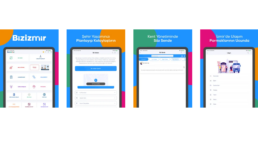
The Bizİzmir project aims to foster a transparent, pluralistic, and participatory municipalism approach. Its main objective is to empower Izmir residents by facilitating their direct participation in decision-making processes and establishing a culture of democracy within the city. The project achieves this through the development of the BizIzmir website and mobile app, which serve as a centralized and interoperable platform to access information on municipal services, provide feedback and participate in citizen-driven initiatives.
DESCRIPTION OF ACTIONS CARRIED OUT
In accordance with the established objectives, the following features and modules have been developed and integrated into the platform. These are fully accessible from both web browsers and the mobile application. Bizİzmir is a platform that offers information transparency services, access to municipal services, electronic transactions, social support, social support, citizen participation, emergency information, smart parking, transportation guide, veterinary appointments, accessibility, local information, and personalized notifications. It aims to empower Izmir residents and improve the quality of life in the city.
KEY SUCCESS FACTORS
The total numbers of downloads of the app are as follows:
• Android: Total number of installations at any given time 181,000, and average number of weekly downloads of the app 60.
• iOS: Total number of installs at any given time: 46,200, and average number of weekly downloads of the app 227.
MAIN RESULTS ACHIEVED
Bizİzmir has been facilitating the daily lives of thousands of Izmir citizens every day with the services it offers. In parallel, it has made it possible to reach more citizens and has contributed to increasing citizen awareness of the Municipality's actions and projects. And in turn, this digital tool has been especially beneficial for Izmir Municipality in data collection and policy adaptation, as it aims to develop local government accountability, encourage digital citizen participation to provide a more adequate public service and promote a democratic culture.

Izmir Govtech Initiative
The İzmir Metropolitan Municipality has been able to optimize resource allocation, improve efficiency and raise the overall quality of governance.
OBJECTIVES
The İzmir GovTech Initiative is a comprehensive initiative developed by the Izmir Metropolitan Municipality to transform governance through the integration of innovative technologies and digital tools. This initiative encompasses several projects, including Emergency Izmir, Visit Izmir, Izmir Agriculture Mobile App, Smart Alert System Project, and Emergency Information System.
DESCRIPTION OF ACTIONS CARRIED OUT
• Emergency Izmir. Improves emergency response and coordination during disasters and emergency situations, such as earthquakes, fires, search and rescue operations, accidents, and floods.
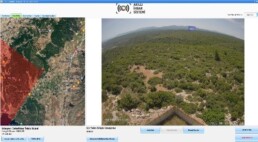
• Smart Alert System Project. The Information Technology Department of the Izmir Metropolitan Municipality has developed a solution for the detection and rapid response to fire and flood situations, which are considered the most critical problems in the region.
• Emergency Information System. Citizens can take necessary measures and precautions by being informed in advance of disasters, emergencies, and weather events without delay. They can receive instant information about all events occurring in the vicinity according to their location and act.
• Visit Izmir. The Visit Izmir mobile application allows those who wish to visit Izmir on their cell phones to learn about more than 2,300 points of interest in the city.
• Izmir Agriculture Mobile Application. The mobile application provides a comprehensive platform for producers engaged in agricultural activities in Izmir. It combines agricultural support, data analysis, market access and information sharing to improve productivity, sustainability, and economic growth in the agricultural sector.
KEY SUCCESS FACTORS
By leveraging technology, the İzmir Metropolitan Municipality has been able to optimize resource allocation, improve efficiency, and raise the overall quality of governance. The success of these projects serves as a testament to the transformative potential of government technology (GovTech) to improve public administration and service delivery.
MAIN RESULTS ACHIEVED
Through the integration of technology and innovative solutions, the initiative has significantly improved emergency response and coordination during disasters, strengthened fire prevention and management, provided advanced information for disaster preparedness, enhanced tourism promotion and visitor experience, and supported agricultural activities.

Vienna Climate Team
Vienna Climate Team is an initiative of the City of Vienna that encourages the participation of residents in shaping their environment and implementing climate-friendly ideas.
OBJECTIVES
The Vienna Climate Team aims to address the climate crisis through joint action and collaboration. It is an innovation in governance and participation that seeks to initiate cross-cutting and thematic projects for climate change protection and adaptation, ultimately creating a liveable, carbon-neutral Vienna.
DESCRIPTION OF ACTIONS CARRIED OUT
The participatory Vienna Climate Team project has a duration of two years (2022 and 2023) and seeks climate-friendly ideas for three districts each year. A budget of approximately €20 per inhabitant is allocated to implement the projects. The process involves submission of ideas by residents, evaluation by experts from the City of Vienna, co-creation workshops, evaluation of project outlines and final selection by a citizen jury. Implementation of the winning projects is carried out by the City of Vienna within two years. The initiative has administrative structures and a support network, and continuous evaluation is carried out to improve its effectiveness. The evaluation results will support the transition of the pilot project to regular operation after the two-year trial period.
KEY SUCCESS FACTORS
Resident participation, diversity of ideas and knowledge, and collaboration between the city's political and administrative bodies and residents are the key success factors of the Vienna Climate Team. By empowering residents and promoting their participation, the initiative seeks to generate innovative ideas, promote community involvement, and implement selected projects that contribute to a more sustainable and climate-resilient future in Vienna.
MAIN RESULTS ACHIEVED
During its pilot year in 2022, the Vienna Climate Team achieved significant results. More than 1,100 ideas were received, resulting in the development of 102 projects. Currently, 19 winning projects are being implemented. In addition, strong organizational structures were established, and a support network was built. In the current pilot year of 2023, more than 1,300 ideas were submitted, and plans are being developed for the implementation of additional projects starting in 2024.